FIA Formula 2 Championship 2027 Car Launch Press Conference
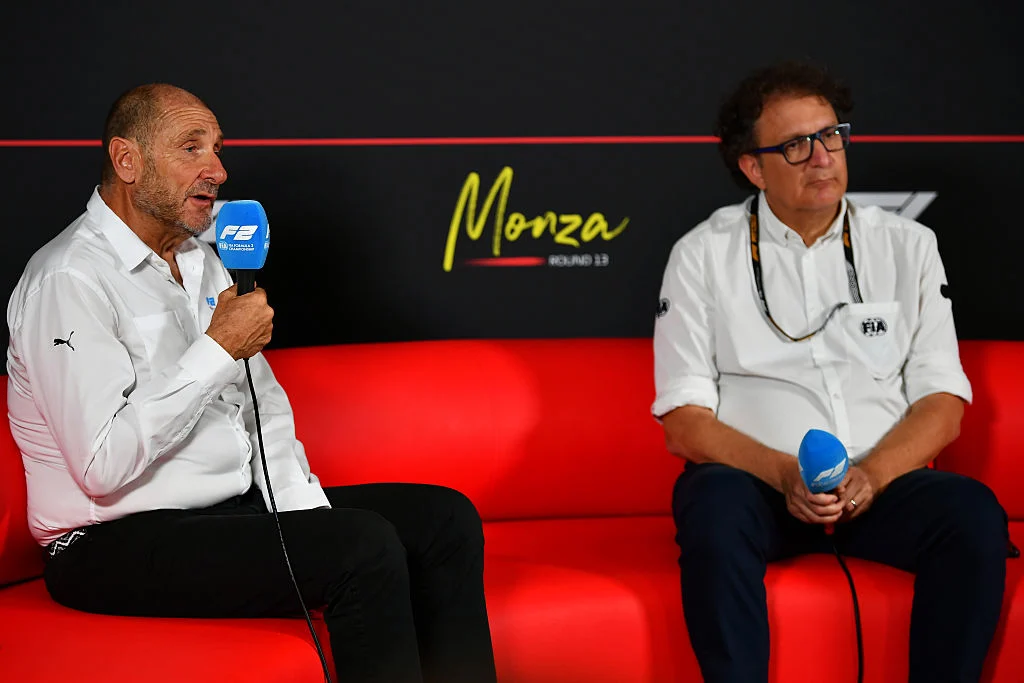
Q: Welcome to our FIA Formula 2 2027 car reveal press conference, following the launch a moment ago, which was attended by reigning World Champion Lando Norris and Oscar Piastri. We’re joined by the FIA F2 CEO Bruno Michel and Nicolas Tombazis, the FIA’s Single-Seater Director. A very warm welcome to you both. Bruno, if we could start with you, please tell us about the goals behind this new car?
Bruno Michel: Well, the mission of Formula 2 has always been to prepare drivers for Formula 1 and to make sure that when they get into Formula 1, they are ready. So, of course, the car plays a very important role in this preparation. And what we’re always trying to do, because we are making a new car generally every three years, a completely new car or an upgrade of the existing car, we’re trying to get as close as possible to what Formula 1 is at this very stage, to make sure that the drivers are going to be ready when they jump into Formula 1. And that goes not only with the car, but also with the tyres, because we’re using the same supplier, the same partner as Formula 1, with many other subjects of the car. But we are trying to make sure that the drivers are getting as ready as possible.
Q: OK, thank you. Nikolas let’s come to you. Technically, how different is the 2027 car?
Nikolas Tombazis: This car is actually a significant upgrade over the previous car. So, without answering your question directly, there are a lot of similarities to the previous one, a lot of commonalities for cost reasons and to maintain the financial sustainability of the sport, which is always a priority. With that said, there are some very significant changes on the aerodynamics. As Bruno said, there has been a desire to align much more with the Formula 1 philosophy, so all aerodynamics are new, and I think that will guarantee an even better ability to follow closely other cars, not that this is a problem in Formula 2 in general. And I would say there’s also the starter motor, which has been added. That is, again, another important feature in order to avoid, from a sporting point of view, having stalled cars around the track and interrupting the flow of races because of that. The car does have more downforce. I think it’s about 25 points of downforce and a bit more drag, three points. So, it’s fundamentally a much more efficient car dynamically, as well as having better characteristics for following other cars and being more similar to Formula 1, and hence a better proving ground for drivers learning, going up the ladder to get into Formula 1.
Q: How complicated has it been to introduce the starter motor specifically?
Tombazis : It’s obviously an important project. I don’t think it’s an engineering miracle. It’s just there’s been the desire to spend some time and some weight, but the extra weight of that is more than compensated with the better aerodynamics.
Q: Thank you. Bruno, if we come back to you, the car has already tested in Hungary back in June. What feedback did you get from the driver, Paul Aron?
Michel: Well, we had very positive feedback because the good thing with Paul is that he’s been driving the former car as well, so he could have a very interesting comparison between the two cars. And he said that it was very pleasant to drive. He said that you could tell definitely that there was more downforce in this car, that, as Nicolas said, the little additional weight that you got because of the onboard starter, you couldn’t feel it at all, and that he thought that the races were going to be very interesting. Now, as long as we don’t have 22 cars on the track together, we don’t know. But we’re quite confident, with all the work that’s been done aerodynamically between the FIA and ourselves, that we will have a very beautiful car to race.
Q: And what are the plans for the rollout of the new car? When will the teams start to receive the car?
Michel: We’re continuing testing the car. We’ll take the car in the wind tunnel because what we want also is to centralise all the information from the 100% wind tunnel to pass the information to the teams, so they will get all the data so that they don’t have to do it themselves. And then the idea is that the first car will be delivered at the end of the year to the teams, and the second car sometime at the end of January. And then we’ll go testing with 22 cars, because it’s always different when you have a test with one car and when you have a test with 22 cars. And then the cars will be ready to fly to the first race for next season.
Next Up
Related Articles
 Rafael Câmara: 'A good start but we have to keep working hard' with points lead in reach
 Tuukka Taponen steps up with ART Grand Prix for the 2027 season
 Chasing the Dream Season 8 Episode 13 – Out Today
 ‘We’re definitely in the fight’ says Dunne after race-winning Baku weekend
 Round 12 Post Qualifying 2 Press Conference
 Joshua Duerksen joins Hitech for 2027 F2 season